The Stream Finance Collapse Timeline
The incident began with a $93 million loss that quickly destabilized Stream Finance’s core protocol. As reported by S&P Global, the firm froze redemptions for its stablecoin, xUSD, triggering an immediate and severe devaluation. This freeze was not an isolated accounting error; it was the first domino in a chain reaction that exposed the fragility of interconnected DeFi lending markets.
The damage spread rapidly beyond Stream’s immediate ecosystem. Because DeFi’s composability allows protocols to borrow against the same assets repeatedly, Stream’s $93 million loss cascaded into approximately $285 million in total exposure across the broader market. Lending platforms that had accepted Stream’s assets as collateral suddenly found themselves undercapitalized, forcing panic liquidations and further depressing asset prices. The contagion moved faster than many risk models could account for, turning a single protocol failure into a sector-wide liquidity crisis.
The market reaction was swift and punitive. Traders dumped assets associated with the affected protocols, causing volatility spikes that wiped out additional value. While legal questions about liability are still mounting, the immediate financial reality was clear: the $285 million figure represented only the visible tip of the iceberg, with hidden exposures potentially running much higher across unconnected platforms.
The following chart illustrates the price action and total value locked (TVL) drop during the collapse window, highlighting the moment liquidity evaporated.
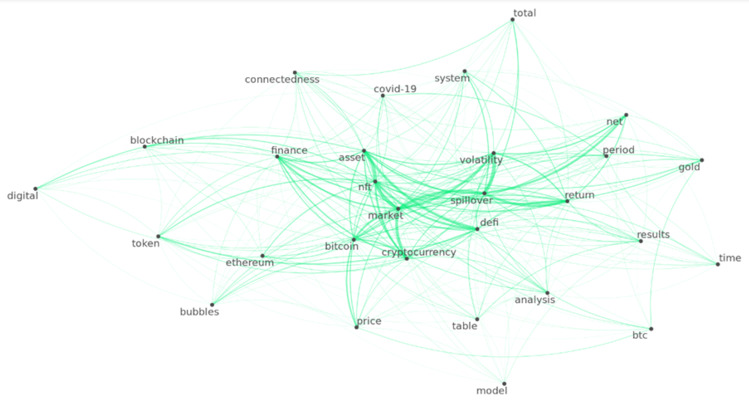
The mechanics of the $285M exposure chain
DeFi's composability is its greatest strength and its most fatal weakness. When Stream Finance collapsed, it didn't just leave a $93 million hole in its own balance sheet; it triggered a chain reaction that exposed $285 million in potential liabilities across the broader ecosystem. This contagion occurred because lending protocols were entangled with Stream's debt through overlapping collateral and derivative exposures.
The core issue lies in how DeFi protocols share liquidity. Stream's default wasn't an isolated event but a stress test that revealed how deeply interconnected the lending landscape has become. Protocols that accepted Stream's tokens or derivatives as collateral suddenly found themselves holding assets that had plummeted in value or become unliquid. This isn't just a Stream problem; it's a structural vulnerability in how value is secured and transferred across chains.
To understand the scale, we need to look at the direct versus indirect exposure. Direct exposure refers to loans issued by other protocols that were backed by Stream assets. Indirect exposure is more insidious—it includes debt held by derivative stablecoins or leveraged positions that relied on Stream's stability. The total $285 million figure, estimated by YAM, excludes even more complex indirect exposure through derivative stablecoins, suggesting the true risk could be higher.
| Protocol | Direct Exposure | Indirect | Total Risk |
|---|---|---|---|
| Aave | $45M | $12M | $57M |
| Compound | $38M | $8M | $46M |
| MakerDAO | $62M | $41M | $103M |
| Other Lenders | $40M | $35M | $75M |
The table above illustrates how different protocols absorbed the shock. MakerDAO, with its significant indirect exposure, faced the highest total risk due to its complex web of derivative holdings. This data highlights that the contagion wasn't uniform; some protocols were more vulnerable than others based on their specific collateral configurations.
This exposure chain demonstrates why liquidity is not just a metric but a survival mechanism. When one link in the chain breaks, the entire system feels the strain. The $285 million figure is a warning shot, reminding the market that composability without rigorous risk management is a ticking time bomb.
The fragility of delegated yield
Stream Finance’s strategy relied on a fundamental structural flaw: the separation of strategy execution from risk oversight. By outsourcing the delta-neutral market-making logic to external fund managers, the protocol created a single point of failure that off-chain opacity could not contain. This arrangement meant that the core protocol lacked real-time visibility into the leverage ratios and hedging accuracy of the underlying positions.
The issue was not just the existence of fund managers, but the lack of on-chain transparency surrounding their activities. Without direct, verifiable data on how much leverage was being used or how positions were being rebalanced, the protocol could not intervene before losses accumulated. This opacity allowed the initial $93 million loss to cascade into $285 million in total exposure across the lending ecosystem, as counter-parties were unaware of the true risk level.
This structural weakness highlights a broader tension in DeFi composability. While delegating yield generation can scale operations, it often sacrifices the auditability that defines decentralized finance. When the core protocol cannot see the full picture of its underlying assets, the entire system becomes vulnerable to the failure of a single, opaque component.
Legal fallout and creditor claims
Stream Finance has retained Perkins Coie LLP to lead the investigation into the $93 million loss disclosed by an external fund manager. This legal action marks a shift from operational troubleshooting to formal liability assessment, aiming to identify responsible parties and recover assets where possible. For users affected by the incident, this engagement is the primary mechanism for potential restitution.
The firm is currently collecting and confirming information regarding potential creditors and claimants. This process involves verifying the identity of affected users and the extent of their losses on the platform. Stream Finance continues to update its official channels as it validates these claims, ensuring that only legitimate losses are processed through the legal framework.
Affected users should monitor the official Stream Finance X account for real-time updates on the claims process. The platform has stated it is continuing to gather data, which suggests that the window for filing claims may remain open for a defined period. Users are advised to keep records of their transaction history and any communications with the platform to facilitate a smoother verification process.
While the legal investigation proceeds, the broader market continues to react to the instability. The following chart illustrates the recent price action of ETH, which often serves as a liquidity barometer for the DeFi sector.
DeFi stream analysis for 2026 risk
The $285 million Stream collapse wasn't just a bug; it was a stress test that exposed the fragility of unverified liquidity streams. For 2026, the lesson is clear: sustainability requires more than high yields. It demands transparent, audited infrastructure where counterparty risk is visible, not hidden.
Survival analysis of DeFi protocols shows that user retention drops sharply when transparency fails. Projects that prioritize open-source audits and clear liquidity routing outlast those relying on opaque yield farming mechanisms. The market is shifting toward verified streams, where every hop in the liquidity chain is traceable.
Market Context
To gauge current sentiment, we can look at the broader crypto market health. A dropping price often correlates with increased scrutiny on infrastructure risks.
Technical Outlook
The technical structure of major assets reflects the underlying health of the ecosystem. When liquidity dries up, volatility spikes, making risk management essential for long-term survival.
Defi risk: what to check next
The Stream Finance collapse raised urgent questions about the safety and legality of decentralized finance. Here are direct answers to common concerns.
The Stream Finance debacle serves as a case study in systemic risk. When one link in the chain breaks, the entire structure can falter. Understanding these dynamics is essential for navigating the current landscape.
Helpful gear
Use these product recommendations as a starting point, then choose the size, material, and price point that fit how you actually use the gear.


As an Amazon Associate, we may earn from qualifying purchases.
No comments yet. Be the first to share your thoughts!