What DeFi streaming actually means
DeFi streaming changes how value moves on-chain. Instead of sending a lump sum all at once, you release funds continuously over time. Think of it like a faucet rather than a bucket dump. This continuous liquidity stream allows for real-time payments, dynamic vesting, and instant settlement without waiting for block confirmations to finalize large transfers.
Traditional ERC-20 transfers are binary: money is either there or it isn't. Streaming protocols like Superfluid treat value as a flow. You can adjust the rate, pause it, or stop it instantly. This is critical for high-stakes finance where capital efficiency matters. It turns static balances into active, working liquidity.
Note: Streaming enables real-time payments and vesting, distinct from standard ERC-20 transfers.
This shift impacts market strategies significantly. Traders can hedge exposure in real-time rather than relying on periodic rebalancing. Developers can pay contributors proportionally to work done. The infrastructure supports a more granular approach to capital allocation, reducing the friction of traditional financial settlements.
Top infrastructure protocols for streaming
Streaming finance relies on a thin layer of protocol infrastructure that sits between the blockchain and the end user. These protocols handle the continuous, second-by-second transfer of assets, ensuring that liquidity moves at the speed of the network rather than in discrete, block-bound transactions. Understanding this layer is essential for building reliable DeFi Stream guide applications, as the underlying protocol dictates both the security model and the developer experience.
Superfluid: The Standard for Real-Time Value
Superfluid has emerged as the dominant infrastructure layer for continuous token flows. By replacing traditional transaction models with a "flow" abstraction, it allows smart contracts to pull or push funds in real-time. This architecture is critical for use cases like payroll, subscription services, and dynamic liquidity provision, where static balances are insufficient. Superfluid’s cross-chain interoperability (Superfluid 2.0) further simplifies deployment, allowing streams to operate seamlessly across multiple EVM-compatible chains without complex bridging logic.
Interoperability and Alternative Layers
While Superfluid leads in adoption, other protocols are building specialized infrastructure for streaming. Some focus on non-EVM environments, while others prioritize specific compliance or privacy features. The choice of infrastructure often depends on the target chain and the specific requirements of the DeFi Stream guide application, such as gas efficiency or atomic swap capabilities.
To visualize the market context of these underlying assets, here is the current performance of Ethereum, which serves as the primary settlement layer for most streaming protocols:
Comparing Infrastructure Options
Selecting the right protocol involves weighing factors like chain support, token compatibility, and developer tooling. The table below compares the key attributes of the leading streaming infrastructure providers.
| Protocol | Primary Chains | Developer Focus |
|---|---|---|
| Superfluid | EVM (Multi-chain) | SDK & Superfluid 2.0 |
| Morphware | EVM | Flow contracts |
| Streamr | EVM, Polygon | Data stream focus |
The choice of infrastructure ultimately defines the reliability of the streaming service. For most high-stakes financial applications, the maturity and security audits of Superfluid make it the default starting point, while specialized needs may require exploring alternative layers.
Essential tools for managing streams
Monitoring and controlling DeFi streams requires a blend of dashboard analytics, protocol interfaces, and security infrastructure. Unlike traditional finance, where a bank statement tells you your balance, DeFi streams require real-time visibility into continuous payouts, liquidity depth, and smart contract interactions. If you are managing high-stakes positions, relying on a single interface is a liability.
Dashboard and Analytics
You need a primary dashboard to visualize stream flows. Tools like DeFi Llama or specialized stream dashboards (e.g., Stream Finance’s own interface, if available, or third-party aggregators like DefiEdge) allow you to track active streams, historical payouts, and protocol health. These dashboards aggregate data from multiple chains, giving you a consolidated view of your exposure. Without this, you are flying blind, unable to react to sudden drops in liquidity or changes in yield rates.
Protocol Interfaces
The core management happens directly on the protocol level. Whether you are using Aave for lending streams or a dedicated streaming protocol like Superfluid, you must be comfortable navigating their native interfaces. These interfaces allow you to start, stop, or adjust the rate of your streams in real-time. Familiarity with these UIs is non-negotiable; you cannot rely on intermediaries to manage your cash flow.
Security and Wallet Management
Security is the bedrock of stream management. Since streams are continuous, a compromised wallet can lead to ongoing, unmonitored drains. Use a hardware wallet like a Ledger or Trezor to sign transactions. This keeps your private keys offline and adds a layer of physical verification for every stream adjustment.


As an Amazon Associate, we may earn from qualifying purchases.
Market Context
DeFi streams are often tied to volatile assets. Monitoring the underlying token’s price action is critical for risk management. A sharp drop in the asset’s value can erode the yield or trigger liquidation mechanisms depending on the protocol.
Chart: ETH/USDT daily candlestick chart with volume. Use this to gauge the volatility of the underlying asset in your streams.
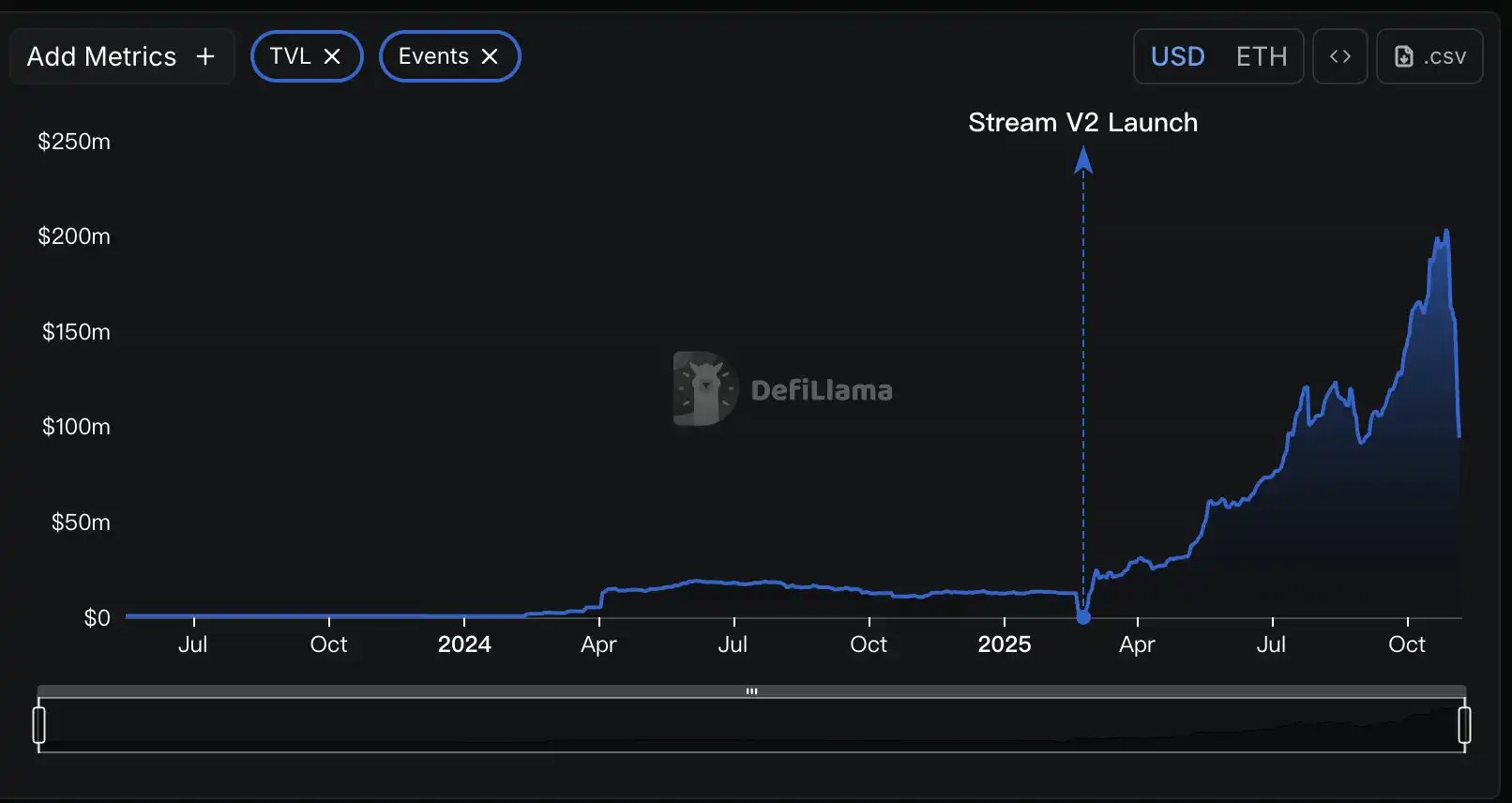
Image: Stream Finance Impact

The collapse of Stream Finance highlighted the systemic risks of unmonitored streaming protocols. This image illustrates the broader market impact, underscoring the need for robust monitoring tools.
Market strategies for yield streams
Streaming assets transforms how capital moves through your portfolio. Instead of locking funds into static positions, you can align cash flow with real-time market conditions. This approach reduces the friction of manual rebalancing and allows for continuous yield accumulation without the idle time between traditional payout cycles.
Salary and vesting structures
Automating salary payments or token vesting schedules removes the administrative overhead of recurring transfers. By streaming stablecoins or native tokens, you ensure that recipients receive liquidity exactly when it is earned, rather than waiting for end-of-month processing. This method is particularly effective for remote teams or DAO contributors who require predictable, on-chain income streams.
Yield farming with streaming liquidity
Streaming liquidity into yield farms allows you to capture rewards continuously rather than in discrete blocks. This strategy mitigates the risk of missing out on high-yield windows due to timing errors. However, it introduces complexity in tracking impermanent loss across varying time intervals. You must monitor the underlying asset performance closely to ensure the streaming yield outpaces the depreciation of the principal.
Managing volatility risk
The primary risk in streaming yield strategies is market volatility. If the value of the streamed asset drops faster than the yield generated, your real returns diminish. To manage this, many protocols allow for dynamic streaming rates that adjust based on oracle data. Keeping an eye on price action helps you decide when to pause or accelerate streams to protect capital.
Smart Contract and Oracle Risks
DeFi streams move money automatically, but that automation cuts both ways. Smart contract bugs and oracle failures can drain pools in seconds. When price feeds lag or get manipulated, liquidations cascade through the system, often wiping out liquidity faster than anyone can react. You need to treat every stream like a live wire: respect the voltage, wear the insulation.
Check the audit status of any protocol before you connect. Reputable audits are the baseline, not a guarantee. Look for bug bounty programs and time-locked upgrades. If a project hasn’t undergone formal verification or has a history of unpatched vulnerabilities, walk away. Your capital is only as safe as the weakest link in the code.
Market volatility amplifies these technical risks. A sudden drop can trigger mass liquidations if your positions aren’t properly collateralized. Keep an eye on the broader market trends, as seen in the Bitcoin chart above, which often dictates the health of the entire DeFi ecosystem. Don’t leverage blindly into a falling market.
-
Verify smart contract audits
-
Check oracle reliability
-
Set liquidation buffers
-
Use separate wallets
Frequently asked questions about DeFi streams
Is DeFi safe for beginners?
Safety in a DeFi stream guide context starts with protocol selection. For those new to the space, it is safest to stick with open-source, well-known projects that have undergone rigorous audits. This minimizes exposure to faulty code or sudden exploits. If you explore newer, fringe investments, a primary precaution is using separate wallets to isolate risk.
Can I make money with DeFi streams?
Yes, there are multiple ways to generate yield, such as providing liquidity or engaging in yield farming. However, these strategies carry inherent risks, including smart contract vulnerabilities and market volatility. It is essential to research the specific mechanics of each stream before locking funds into any DeFi protocol.
How profitable is liquidity mining?
Liquidity mining can be highly profitable, particularly in pools with high trading volume and attractive reward rates. Some platforms offer significant bonus incentives through native tokens, which can further boost earnings. That said, profitability fluctuates with market conditions, so returns are never guaranteed.
What are the top DeFi tokens to watch?
Identifying top tokens requires looking at market capitalization, trading volume, and ecosystem utility. Forbes and other major financial outlets regularly update lists of leading DeFi projects, such as Uniswap, Aave, and Chainlink. Always verify current data, as the DeFi landscape shifts rapidly with new launches and regulatory changes.
No comments yet. Be the first to share your thoughts!