What DeFi streaming means for liquidity
DeFi streaming transforms how capital moves through the financial system by replacing discrete, batched transactions with continuous, real-time asset transfers. Instead of sending a lump sum at a specific moment, users can send money second by second, much like a utility bill or a salary paid by the hour. This shift from point-in-time settlements to a flow of value fundamentally alters liquidity dynamics, allowing capital to be deployed and withdrawn with granular precision.
Traditional banking and early blockchain models rely on settlement windows. You initiate a transfer, and it clears after a delay. Streaming removes this friction. By locking funds in a smart contract and releasing them linearly over time, streaming ensures that liquidity is always available exactly when needed, rather than sitting idle in a wallet or being stuck in pending transactions. This efficiency reduces the capital requirements for participants, as they no longer need to front-load large sums for short-term needs.
The infrastructure behind this shift matters for market efficiency. It allows for more dynamic yield strategies and reduces the risk of slippage in volatile markets. When liquidity is streamed, it can be instantly reallocated to where it is most needed, whether for lending, trading, or collateralization. This creates a more responsive financial layer on top of existing blockchains like Ethereum, where value is not just stored but actively circulated.
This continuous flow model challenges the traditional understanding of "balance." In streaming, the balance is a function of time and rate, not just a static number. For users and protocols, this means liquidity management becomes a real-time optimization problem rather than a periodic reconciliation task. As streaming tools mature, they will likely become the standard for recurring payments, salary disbursements, and even decentralized insurance payouts, making the underlying infrastructure critical for the next phase of DeFi adoption.
Core infrastructure powering real-time transfers
Streaming DeFi relies on a stack of technologies designed to handle high-frequency, continuous value movement. Unlike traditional batch settlements, streaming requires smart contracts that can calculate and distribute funds in real-time based on elapsed time. This architecture shifts the focus from finality to flow, demanding infrastructure that prioritizes speed and deterministic execution.
Smart contracts serve as the engine for these streams. They lock assets and release them incrementally, often using linear vesting logic. Projects like Streamflow have built specialized protocols for this, ensuring that if a stream is interrupted, funds are returned accurately rather than lost to race conditions. The reliability of these contracts is paramount; a single bug in the time-calculation logic can lead to significant financial discrepancies.
Oracles provide the price feeds necessary for stablecoin streaming and cross-chain transfers. Since streaming often involves assets with volatile values, oracles ensure that the rate of flow remains consistent with market conditions. Chainlink is a primary provider for this data, offering the decentralized verification needed to trustlessly update stream rates without manual intervention.
Layer-2 solutions are the highway for these transactions. Streaming generates a high volume of micro-transactions, which would be prohibitively expensive on a base layer like Ethereum mainnet. L2s like Arbitrum or Optimism reduce gas fees to fractions of a cent, making continuous micro-payments economically viable. This scalability is what allows streaming to move from niche use cases to mainstream financial applications.
Top tools for managing DeFi streams
Setting up continuous payments in decentralized finance requires the right infrastructure. You need platforms that handle smart contract deployment, real-time monitoring, and secure custody. The following tools represent the current standard for managing DeFi streams, ranging from user-friendly interfaces to institutional-grade protocols.
Stream Finance
Stream Finance is one of the most accessible entry points for DeFi streaming. It allows users to send and receive tokens like ETH and USDC at a fixed rate per second. The interface is clean, requiring only a Web3 wallet connection to start streaming. It supports multiple chains, including Ethereum, Arbitrum, and Polygon, making it versatile for different network preferences.
Sablier
Sablier is the protocol layer behind many streaming applications. It offers the most granular control for developers and power users. With Sablier, you can create streams with custom parameters, such as variable rates or stop-loss mechanisms. It is the backbone of the ecosystem, ensuring that funds are distributed exactly as programmed without intermediary custodians.
Superfluid
Superfluid focuses on high-frequency, low-latency streaming. It is designed for use cases like salary payments, subscriptions, and real-time data feeds. The protocol’s architecture allows for near-instant settlement, which is critical for applications where timing matters. It supports a wide range of ERC-20 tokens and integrates deeply with other DeFi primitives.
Comparison of Streaming Tools
| Tool | Supported Chains | Fee Structure | Ease of Use |
|---|---|---|---|
| Stream Finance | ETH, Arbitrum, Polygon | Gas only | High |
| Sablier | Multi-chain | Gas + Protocol | Medium |
| Superfluid | Multi-chain | Gas + Protocol | Medium-High |
Security Considerations
Securing your streaming assets is paramount. Since streams are often automated and recurring, a compromised wallet can lead to continuous losses. Hardware wallets like the Ledger Nano X or Trezor Model T are essential for storing the private keys of your streaming accounts. These devices keep your keys offline, protecting them from phishing attacks and malware.


As an Amazon Associate, we may earn from qualifying purchases.
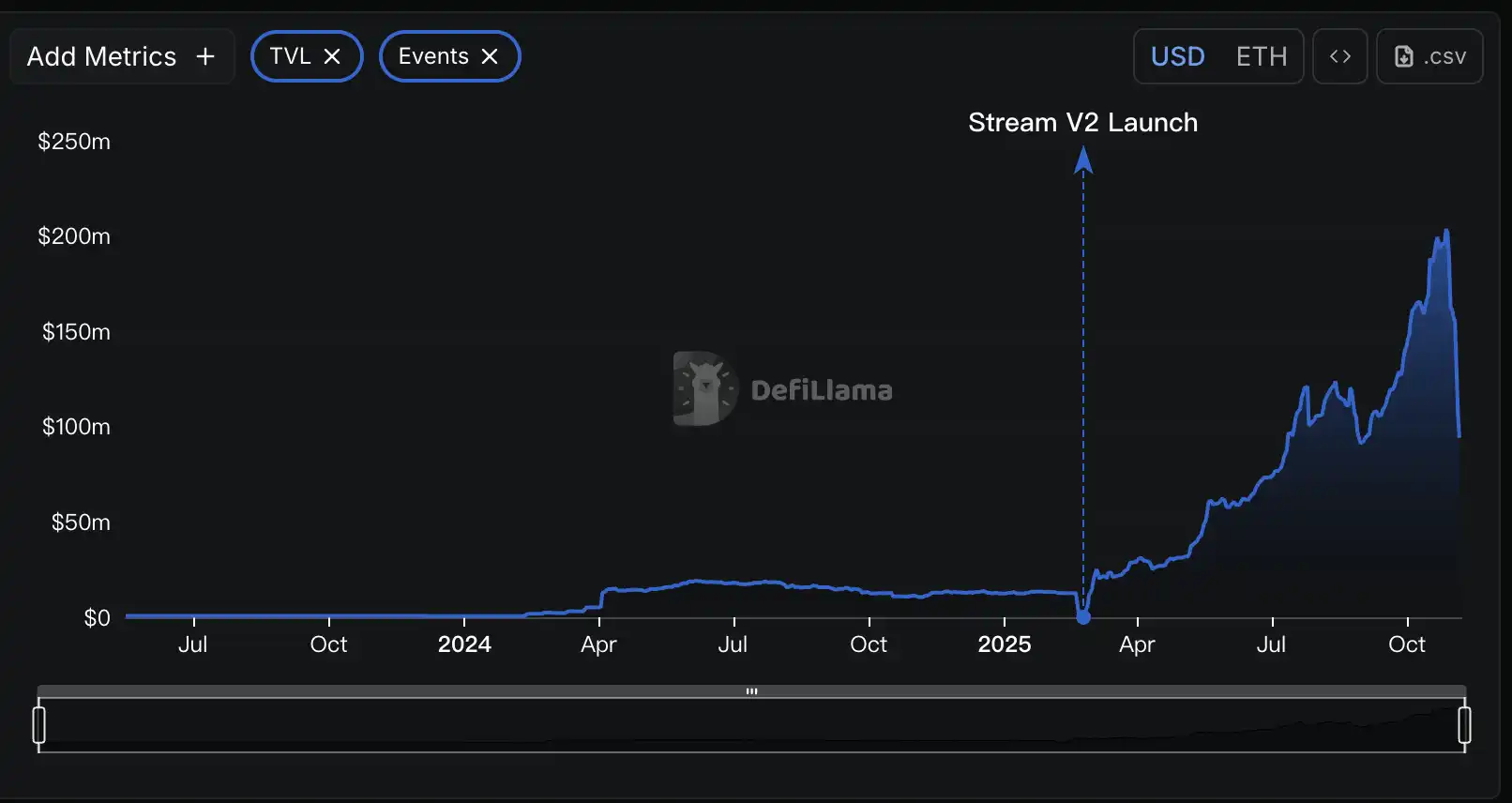
The image below illustrates the broader risk landscape of DeFi. While the sector has faced significant potential exposure, effective tool selection and risk management can mitigate these threats.
Market risks and recent infrastructure failures
DeFi streaming promises continuous, real-time settlement, but the underlying infrastructure introduces distinct counterparty and smart contract risks that traditional finance does not face in the same way. When code fails or a centralized entity mismanages funds, the speed of DeFi becomes a liability rather than an asset. Users are exposed to systemic vulnerabilities where a single point of failure can cascade across protocols.
The Stream Finance debacle serves as a stark case study. The stablecoin issuer lost approximately $93 million, triggering a ripple effect that shook confidence in the broader DeFi ecosystem. This loss was not merely a technical glitch but a failure of due diligence and risk management that highlighted how interconnected these protocols are. The incident underscored the necessity of rigorous auditing and transparent reserve management.
Investors must look beyond yield promises and examine the structural integrity of the platforms they use. Smart contract audits are necessary but not sufficient; understanding the human and operational risks behind the code is equally important. The market is still maturing, and these failures serve as expensive lessons in the importance of trust minimization and robust security practices.
Strategies for safe DeFi participation
Participating in DeFi streaming requires treating your digital assets with the same caution as physical cash. The ecosystem is open-source and permissionless, which means there is no customer support to call if a transaction goes wrong or a protocol is compromised. Safety begins with infrastructure choices that limit your exposure to potential exploits.
Never use a single wallet for all activities. Maintain a "cold" or primary wallet for long-term holdings and a separate "hot" wallet specifically for interacting with DeFi protocols. This isolation ensures that if you interact with a malicious smart contract or a buggy interface, your main assets remain untouched. Think of it as keeping your savings in a bank vault while carrying only a small amount of cash for daily purchases.
Before streaming any funds, check if the protocol has undergone independent security audits. Reputable projects publish audit reports from firms like CertiK or OpenZeppelin. Look for the audit status on the project’s official documentation or reputable aggregators. An audit is not a guarantee of safety, but it significantly reduces the risk of obvious code vulnerabilities that could lead to a drain.

Test the streaming mechanism with minimal capital first. Verify that the stream starts, pauses, and stops exactly as expected. Check the transaction history on the blockchain explorer to ensure funds are moving to the correct recipient addresses. This dry run helps you understand the gas fees and timing mechanics without risking significant capital.

DeFi markets are volatile, and smart contract risks are constant. Set up alerts for large price movements or unusual contract interactions. Regularly review your wallet’s permissions and revoke access to unused protocols using tools like Revoke.cash. Staying active in the community forums and news channels can also provide early warnings about emerging threats or protocol updates.
A practical workflow for safe participation involves a pre-stream checklist. Verify the recipient address, confirm the stream duration and amount, and ensure your hot wallet has sufficient gas for the transaction. After the stream completes, review the on-chain records and close any open permissions. This disciplined approach transforms DeFi streaming from a high-risk gamble into a manageable financial tool.
Common questions about DeFi streaming
DeFi streaming allows you to send and receive funds continuously, like a water hose rather than a bucket. While this technology changes how you manage cash flow, it introduces unique risks compared to traditional banking. Here are answers to the most common questions about DeFi streaming and the broader ecosystem.
No comments yet. Be the first to share your thoughts!